Thursday, June 2, 2011

Royal National Park


Things have been incredible busy around here during the last few months and once again I have have had a hard time balancing the act of getting out there exploring and the task of getting it all written down and documented. Hopefully this blog post will be the first of a quick series of postings that will bring me nearly up to date ;-) One can only hope.

Some time back I did a few walks with the Amoores in the Royal National Park, here is a little sum up of the highlights. The Australian summer do not invite for big excursions into the wilderness – you simply cannot carry the water needed for big walks, and relying on picking water up along the way is risky business – those small creeks have a nasty tendency of going dry when exposed to hot Australian summer weather.


A national park pass is a great idea, particular if you are doing short one day trips out of Sydney, since all of the parks around the metropolitan area is covered by the little sticker – in particular The Royal National Park down south of Sydney, aka “The Royal”.

The coastal national parks close to Sydney all delivers a great combination of the raw power of the sea mixed with spectacular sandstone cliffs, windblown heath and pockets of bushland. The mix in landscape ensures suitable habitats for a broad variety of wildlife. The Royal National Park is the biggest and arguably the most impressive of them all - not much beats a wander along the roaring sea, seeing how the waves pounds the sandstone cliffs, while White-bellied Sea-Eagles soars above :-)

These trips to the Royal National Park were indeed more for the joy of getting out rather than us targeting specific birds or other wildlife and as always, when you get out of your hobbit hole things starts happening around you and it is not necessarily what you expected to find.

The coastal heath delivered the usual gang of birds. You seriously have to admire how the New Holland Honeyeaters have conquered every single stretch of scrubby coastal heath on the NSW east coast, so much indeed that I have finally stopped taking those NHH photo, where a daring individual sits high, exposed above the scrub, taking looks at those camera slinging travelers passing through his windblown habitat. Instead I concentrated on the fantastic explosion of color, that was added to the otherwise dull scrubby green heath by a larger than normal presence of wildflowers.

I have tried to avoid it for years when it comes to wildflowers, but as with the birds and the other stuff I take photos of it all becomes more interesting when you start naming it. Pretty photos are all good, but if you can add names, then you also get the stories and the insight. So here we go, with great help from the all knowing internet I am willing to risk it and name the wonderfully red and white colored beauty above as Native Fuschia or Fuschia Heath, Epacris longiflora. Easy - even with next to no Latin skills it makes sense to name these elongated flowers "longiflora" i.e. long flowers.
The Rush Fringe Lily, Thysanotus juncifolius, below was actually the reason why I started looking for wildflower names - it is a stunningly beautiful flower and I simply felt that I needed to put the effort in to at least name this little gem. Next time I promise that I will bring the macro lens for some more appropriate close ups. The flower only last one day, but there are probably a couple of neighbors slightly out of sync, if you need more than 24 hours to return.


The strange looking "flower" below is from the Drumsticks & Conesticks family, Proteaceae. Spending some time online I have reached the conclusion that this one is the Narrow-leaf Drumsticks, Isopogon anethifolius.


A tip from a guide book steered us up along a little fresh water creek, through some scrubby bush and suddenly we were at our own private little waterhole, with waterfall, shade and some very confident and photogenic Water Dragons, Physignathus lesueurii.


The level of confidence should be pretty clear from the photo below - if food is on the other side and the way has been blocked by a shoe I will just have to climb the shoe .. and the fact that the shoe was well and truly attached to the leg of a human, that did not try to sit particular still, was of less concern :-) Not even the pregnant member of our little bushwalking gang showed that much lust for food.

A final treat, was the spotting of yet another wildlife species lured in by the power of food. While sitting eating on the sloping rocks bordering the waterhole tiny amounts of food must have dropped into the water, because suddenly a crayfish, Euastacus, emerged from the deep, searching for a meal. It was so eager indeed that strategic placement of crumbs in hard to reach places, nearly lured it out of the water.

Great stuff, once again the Royal delivered! These trips are very much a testimony to the fact that if you get out, you might not always see what you expect, but you will see something exciting.

Friday, February 25, 2011

Bowra Station - Creatures of The Night and Going Home


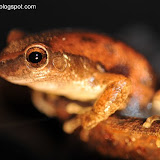
My last night at Bowra Station and I was out with the macro lens again. As always it was all happening, the creatures of the night very performing yet another fantastic show. To get an idea, while standing doing my cooking I literally had to be careful not to step on frogs that were busy jumping around trying to find a good spot for their nightly serenade performance.

A welcome abstraction from the frogs was a couple of geckos that had decided to call the shearer's quarters home, I believe they are Tree dtellas, Gehyra variegata. Old wooden buildings in the outback seems to host all kinds of exciting wildlife, the huntsman below had saved itself lots of work by catching dinner early.


The strange looking insect above gave me a bit of trouble, but it is probably a Mole Cricket Gryllotalpa brachyptera. Funny little thing that has the looks of a great digger - which it apparently is! - but it can also swim and fly, my first impression was that it looked a little front-heavy for such exercise, but nature will constantly surprise :-)


If you see frogs there will be snakes! - at least that is a saying I have heard plenty of times down here in Australia. I will say straight away that I did not see any snakes at all, I am sure they were there, but I well and truly missed them .. as it often happens with snakes. I had been slightly surprised when I realized that the campsite was directly up against the local swamp and with the amount of frogs around Bowra, and in particular around my tent, I must admit that I had checked the zip in my tent thoroughly before going to sleep. However, none of the other happy campers had seemed to worry so I did not want to be the "scared foreign tourist" and just adapted to the situation by performing the before mentioned extra check of the zip and my little "clean the boots before putting your feet in them"-routine in the morning. This second evening I had practically forgotten of the chance/risk of meeting a snake when a new Australian visitor arrived. After overlooking the campsite it was pretty clear that the shearer's quarters seemed much safer and I soon found myself in a weird situation trying to explain that "nah, you are unlike to see a snake and why should those snakes try to get into your tent?" and "they would not have placed the campsite here if it wasn't safe" .. arguments that I had used the night before convincing myself that it was all good :-D


After another great sleep, I was treated with the most fantastic sunrise. One of the first birds of the morning was a Major Mitchell's Cockatoo circling the campsite while making sure that no one could be in doubt that dawn was breaking. When the morning sun hits an agitated Major Mitchell's Cockatoo with raised crest, it is a great idea to have your camera ready, since this subdued colored bird becomes one of the most beautiful birds in Australia.


I had to leave Bowra, it was tempting to stick around for another morning, but when it comes to driving I very much like to have good time so that I can allow myself to stops along the way if something looks interesting - and after a little fueling trip to Cunnamulla the day before I was pretty sure that I would be seeing predator birds along those morning outback roads.


Indeed I did! Swarms of grasshoppers being exposed on the bitumen were easy pickings and had lured an excellent selection of large birds to land. Approaching slowly in the Magna seemed to be the best way of getting in close, but every move I made was being monitored and it was not appreciated when I rolled the window down and got the lens out.


I had another great encounter on the way home, approximately 50km south of Cunnamulla 2 Brolgas flew across the road - what a fantastic bird the Brolga is! Unfortunately the Magna had reached cruising speed and being alone in the car I felt it was to much of a job to control the car while shooting photos out the window. Luckily it is one of the birds, I have seen and taken photos of before.


I love driving in the outback, it is heaven compared to sitting in a queue in Sydney using 50 min doing the 18km to work knowing that you will have to spend the same amount of time going home later that day. You set the cruise control and keep an eye out for monitors and Brolgas and otherwise it is all easy ... except when trouble strikes!

There I was looking out for those monitors trying to cross the road when suddenly the road quality rapidly deteriorated. I remember sitting there thinking "this piece of road is pretty bad - they should do something about it". A quick glance in the mirror did however reveal that not only was the road bad, the Magna was belching out smoke from the right hand rear tire ... Time for a wheel change! Apart from spending a bit of time giving the Magna some new rubber, the trip back home went extremely well. I managed to make it all the way home to Coogee and all in all the long weekend escape to Bowra only cost me one extra day off from work - what a fantastic way to use a long weekend - Sitting here writing about it I get a very strong feeling of having to do something like that again.

All good! This is the last Bowra post from my 2010 trip, I will try to hurry and get the blog more up to date, however, generating "new material" for the blog has even higher priority.
Out of more than 2000 photos I have included 130 in my Bowra Station Picasa Album, a large part of them have been used in these Bowra Station blog posts, but feel free to follow the link below to see them all.
Bowra Station

Friday, February 18, 2011

Bowra Station - Another Full Day of Excitement


Another big day at Bowra and what a day! :-) After a great sleep I crawled out of the tent as the sun started rising and I was greeted by the local Chestnut-crowned Babbler family dancing around my tent looking for food. My plan for the day was pretty similar to what I had been doing the day before, but benefiting from being significantly more rested and alert I expected another cracker of a day exploring the south-western outback of Queensland.

Our little "Bore-drain-walk"-team was once again ready for a wander along the drainage canal and as the day before I was in for some of the most intense and varied birding I have ever experienced in Australia.

Most of the birds from the day before were still around. Spotted Bowerbird was jumping around in the trees and we once again found the White-winged Fairy-wren in its bush - this time it seemed to be much more relaxed with the attention and I managed to get in close and snap a few photos.

A newcomer this early morning was the Snake-necked Turtle Chelodina longicollis above. Notice how the turtle has hidden its long neck and head by folding it horizontally under the front edge of the carapace, all fresh water turtles in Australia (except for the Pig-nosed Turtle) do this, hence called 'side-necked' turtles. This is different from e.g. the American species that will pull their head straight in when threatened. Another feature of this great little creature is that if you pick it up it will "release a pungent fluid" that will keep you reminded of your wrongdoing for at least a few hours :-D .. it wasn't me ;-)

Birdlife was once again absolutely stunning! Woodswallows, Honeyeaters, Friarbirds - just to get an idea, in less than 50 meter we saw 3 type of parrots; Australian Ringneck, Blue Bonnet and Bourke's Parrot. I was very happy to finally get a photo of Bourke's P., I have seen it once before, but did not manage to get the snap-box pointed in the right direction in time. The Blue Bonnet is another bird I have only seen once before - actually I saw both of these great parrots first time during my trip to Mungo National Park Easter 2009, one of the very first blog posts here on Life of Allan.


No Bowerbird without a bower! After our morning stroll, the caretakers at Bowra had promised to show us the bower of the Spotted Bowerbird. Maybe the Satin Bowerbird makes a "nicer" bower by being so selective in its choice of color, but no doubt that the Spotted Bowerbird had put a lot of hard work into decorating its love nest. Apparently it is not the work of a single male bird, but instead a little gang of boys keeping the bower spotless. All the attention attracted one of the owners and I finally managed to get a decent photo of this species.


Another outback specialty that I have seen before, but not been able to capture well is the Red-backed Kingfisher. But it is all easy around the homestead at Bowra, the birds are used to the attention and will happily strut their feathers. My feeling is that it was significantly harder getting close to birds out in the landscape away from the homestead though, out there humans are rare and the birds much more wary.

However, there were still a few of those "wary" birds that I would not mind seeing and as usual if you are after a specific bird you odds of success are significantly increased by going to its habitat. So the Magna and yours truly once again challenged the red dirt tracks of Bowra.


Midday early summer in outback Australia is not prime birding conditions, but as evident from my earlier dragon post it is near perfect conditions for a bit of reptile spotting. Also I spotted some Mulga Ant nests, Polyrhachis macropa. I have always thought that their easily recognizable rim structure was made to protect the nest from flooding after heavy rain, that is probably right, but there might be even more advantages from this feature - like using the funnel to trap moisture during cold night etc. Read here and see a nest significantly larger than the one in my photo here - The quite large difference in size have actually made me wonder if the ants responsible for the nest in my photos are indeed the same species that is capable of making these enormous craters .. any suggestions are as always welcome.

Midday seems to be prime time for getting your predator in flight photos. The Whistling Kite above was as curious as the Square-tailed Kite had been the day before, but as discussed in that post, you do not always get the same quality even though conditions seems identical. The Whistling Kite photos are fair and easily good enough for the resolution of a blog post, but they lack the sharpness I managed to get the day before. Maybe a tiny variation in the light available - a third of a stop - pushed shutter speed just outside of what I could handhold that day(?)


I do not know if it was from having been in the sun for one and a half day or what, but apparently I managed to direct some of my attention towards the ground. Exploring Australia I have often seen the perfect cylindrical holes that tells you that there are spiders under ground. Once and a while you can be lucky to spot an inhabitant sitting deep down in the shadow of the hole, but so far I have never been able to get good photos before the spider retreated out of flash range. The little cute feller above displayed a very different behavior and I was very happy to record a solid series of shots of the spider sitting high in its tunnel observing the shenanigans above.


Again local knowledge proved priceless! We had managed to convince one of the Bowra caretakers to come along for another trip up to the area of the Hall's Babblers. On the way there we were having a little stop looking for the Chestnut-breasted Quail-thrush when suddenly a little blob in the top of a tree ca. 50 meters away was identified as a Pied Honeyeater :-) I have seen the Pied Honeyeater before in Gluepot SA, but I would never have called the scrubby looking PH in the photo above from 50 meters away as being one of the best Australian honeyeaters around - It would have been even better if it had been the Black H. :-)


Another great find was a Brown Falcon on the nest. The larger predators are very careful where they build their nests and it was clear that the mum falcon did not appreciate the attention. We kept our distance, but I was lucky to at least in a few of the photos catch a glimpse of the juvenile offspring taking a look at the world around them.


Another great day at Bowra, the sun was low when we finally made our way up to the escarpment and we managed to find the Hall's Babblers again. The long drive is a small price to pay for the adventures that the outback will deliver - sitting writing this post I cannot help feeling that it will soon be time to leave again :-)

All good - Probably my longest single blog post ever, so thanks for reading along and you can pat yourself on the back for making it all the way. I will try to squeeze the rest of the trip into a final large Bowra post soon'ish so that I can get onto some of the other stuff that have happened "lately" :-)