Showing posts with label birding. Show all posts

Saturday, January 22, 2011

Bowra Station - Afternoon Birdwatching - Hall's Babbler


Back at camp and the bird keen caretakers generously offered to help out those of us less well equipped with some 4WD assistance. Aim of the afternoons trip was Hall's Babbler, but as always, when you have a chance of spending some time with experienced birders with local knowledge, you are likely to see much more than you hoped for :-) This lovely afternoon at Bowra I was in excellent company with some lovely people and some seriously good bird eyes!

First rarity of the day was Chestnut-breasted Quail-thrush, another bird where my photos unfortunately does not do it justice. These beauties will dart between cover made up of small bushes or grass and it takes a lot of patience to get in close. I saw Chestnut-breasted Quail-thrush during my trip to Gundabooka National Park, but it is a bird I will happily spend time chasing down everyday and it was good to at least get a few adjoining pixels for the blog.


Next - and the target of our afternoon excursion - was Hall's Babbler. Once again patience and local knowledge was key and after 20 min of searching through the habitat our efforts where rewarded with a little family of Hall's Babblers jumping around not understanding what the fuss was about.


Great bird! I really enjoy seeing babblers in general, they are exciting opportunistic birds and it seems that there is always something going on around them. The sun moves fast in the outback and it was time to head back to the homestead. Walking back to the cars we noticed a clay nest with at least 3 inhabitants. My guess is that it is an Apostlebird nest.


Back at the homestead it was getting dark, under these difficult conditions I surprisingly managed to get a decent photo of a Diamond Dove. All day I had tried, but despite of having all the light you can possibly hope for, I could not get that red eye sharp ... It is obviously a lens problem ;-)

What a day! Full speed from first light and not a dull moment. I was knackered and hungry and was seriously considering just getting some food in my belly and allow myself a monster sleep .. as soon as the darkness fell, the frogs started their nightly serenade and I knew I had to give the macro lens a little workout before giving myself some rest - but that is another story :-)

Saturday, January 15, 2011

Bowra Station - Midday Birding


Bowra was getting warm, but there were still so much to explore :-) I decided to get in the car and try to get an idea of the accessibility of the different habitats and use a bit of time in the areas where some of my targeted species had previous been know to reside.

First stop, slim chance of: Grey Falcon and Slaty-backed Thornbill - who would not stop! :-) Actually there was no chance of a GF sighting, I had already had a little chat to the caretakers and rain in the desert west of Bowra meant that those areas were still wet enough to sustain a good mouse population, hence the GF would not yet need to move east into Bowra range.
So no Grey Falcon, but I ended up being pretty happy with my stop anyway! While trying to photograph a good mix of LBBs (Little Brown Bird) darting around in the bushes a lovely red-brown shadow suddenly appeared few meters above the scrubby trees, leisurely circling above me was the least worried Square-tailed Kite I have ever encountered.

The hovering Square-tailed Kite gave me some of the best bird-in-flight photos I have ever managed to take. I do not know if it was because of the lack of a morning coffee or that holding onto something solid like the Magna's steering wheel for a day made my hands steadier than usual, but the ca. 50 Square-tailed Kite photos are exceptional sharp - much better than what I managed to do the day after in a similar situation with a Whistling Kite .. Hm, there is a slim chance that my lens alters between having good and bad days, but reality is probably that the bad days originate approximately 15 cm behind the lens mount :-)

Most of the LBBs were probably Chestnut-rumped Thornbill - at least it seems that both of the photos here (above and below) are of the Chestnut-rumped variety. Graeme Chapman's site has some excellent photos and a description of what to look for, and verdict must be that the Magna will have to head west again later in the year to sort out the SbT - not bad at all :-)

Roads around Bowra Stations are fairly good and I could get anywhere in a low 2WD, except for the last part of the road up onto the escarpment where you have to go to see Hall's Babbler. From where the Magna would have to give up it would probably result in a 30 min walk to the babbler territory and an equal 30 min back. Luckily I had sorted a lift later during the day, so I could concentrate on the other areas, next stop was "(cloud) cuckoo land" where I was promised Pallid Cuckoo, had a chance on Black-eared Cuckoo and against the odds, but still possible, was the chance of bagging a Redthroat.

I parked at the main road and decided to shake off some of the driving laziness from the day before by walking up the hill. I had great views of the most fantastically bright red and velvety black male Mistletoebird - unfortunately my lens had decided to start taking shaky pictures ;-) .. or the energy from my breakfast was running out. Up the hill and as promised I got my Pallid Cuckoo. I followed two cuckoos having an argument for nearly 30 min, often they were so concentrated on establishing their territories, that I could move in close and get some decent photos. It would have been lovely if it had actually been between a Black-eared and a Pallid, but both vere of the latter origin and I had to settle with a single tick for the hill. :-)

It was now just after midday and Bowra Station was getting truly hot. The bird action began to take off and I started focusing my intention on some of the other wildlife around. To be continued.

Sunday, January 2, 2011

Shane's Park - Birding Western Sydney


Eremaea had been full of reports about some good birding happening out in Shane's Park - a Western Sydney suburb - A piece of Air Services Land off Captain Cook Drive had delivered rarities good enough to fire up the rest of the birding gang and an early Sunday morning the Magna was heading west for a bit of close-to-home weekend excitement.


It nearly seemed the birds knew that it was going to be a warm day. They were all over the place trying to do all their birdy things in the first few hours of the day, so we benefited well and truly from having an early start to the day. In less than 500m of walking we saw Fan-tailed and Shining Bronze-Cuckoo, the latter being new to me.

Shane's Park might not be the most picturesque part of Australia, but the wildlife was excellent and we had heaps of photo opportunities. The army of caterpillars above was a great sight. When approach they simultaneously started to shake enhancing the illusion of them being one large entity.


Sighting of the day - apart from the Shining Bronze-Cuckoo - was a close encounter with the Eastern Brown Snake above and below. What fantastic creatures snakes are! The very large Brown Snake was lying sunning itself next to a small creek when we spotted it. As if it knew it had been sighted it slowly started moving. As we started jumping around trying to get the best possible photos, the snake decided to quickly get away from all the shenanigans and gave a fantastic display of its swimming credentials speeding across the creek and into the scrub in a matter a seconds. Good stuff!


As the day progressed and it got warmer the heat brought out all kinds of exciting stuff including spiders, skinks and weirdly shaped insects. We still saw birds, including the Eastern Shrike-tit below and a possible White-throated Gerygone which we stalked for nearly half and hour without getting sufficiently good views. But it was as if the birds slowly disappeared possibly the heat played a factor, but also the extensive use of petrol propelled 2 and 4 wheelers on the bush tracks made the place a less relaxing hangout for birds and birders.


All in all a great day in Shane's park! We dipped on a number of the reported species, but good to save a few species for another day :-) If you are considering visiting the area, my best advice is to go early! The midday use of the area as a race track is quite disturbing. Second best advice is to keep an eye on the track in front of you - who knows what will be lurking ;-)

Tuesday, September 14, 2010

Lamington National Park - Morning Bird Tour at O'Reilly's


Early morning just after sunrise O'Reilly's arranges a ca. 1 hour bird tour around the estate. It has become a many year old tradition to take guest around meeting some of the feathered inhabitants of the area and as always with animals it simply has to be on every single day to nurture the relationship that has been established between guides and birds. The tour is simply a must for all visitors, it is amazing to see how a few raisins, a bit of cheese(?..!) and years of patience have loosened the usual apprehension birds have towards us humans.

Before the tour really began, we could celebrate the first highlight of the day - a female Regent Bowerbird decided to perch itself in an exceptional photogenic position right outside the O'Reilly's reception - That was a new one for me :-)

After a quick walk around the grassy areas close to the complex and a visit to a Satin Bowerbird bower we dived into the rain forest where a little army of birds were ready to welcome us. I have seen Wonga Pigeon being very undisturbed by the presence of humans before, but Eastern Whipbird is notoriously difficult to get good photos of and here it was jumping around few meters from our feet - "Mister Whippy" was apparently in a great morning mood :-)


As always it is great value being taken around by one of the locals, we were taught how to spot "hidden" hanging bird nests and we saw the hollow tree where the Nightjar was spotted last time - unfortunately it looked like the Nightjar had left the spot - and a flood of tree and plant related knowledge was flowing freely after a couple of inquisitive horticultural questions were asked by a certain tree loving WA gentleman that had joined the birding excursion.


Great stuff and a fantastic opportunity of getting some excellent close-ups of some great birds. Anticipating the darkness of the early morning rain forest I had luckily chosen the fast macro (Sigma 150mm f/2.8) and could continue shooting it quite wide open and with assistance from the on-board flash, as I had done up in far north Queensland. In manual mode with an aperture of f/4.0 and a shutter speed of 1/160s I could control exposure by flash output compensation alone.


Great stuff! I am pretty happy about some of the Eastern Yellow Robin shots - it was a particular photogenic participant. The Yellow-throated Scrubwren is a bird that I do not see everyday, so nice with a close encounter. A Lewin's Honeyeater came along for the shenanigans, but there was no doubt that it was the bowerbirds that were stars of the morning - Great to finally see a Regent Bowerbird - we only saw females during the morning walk, but we managed to spot a male later during the day down at our "rain forest"-terrace - and a male Satin Bowerbird is always a treat.

Thursday, September 2, 2010

Sydney Olympic Park - Above And Below The Surface


Back in Sydney and we celebrated by going for a wander in Sydney Olympic Park with the boys - keen binocular slinging long time bloggers Iain and Jarrod. What a lovely way to spend a Sunday, we managed to clock up a good amount of kilometers while spotting wildlife, snapping photos and solving most of the troubles of the world.


Sydney Olympic Park always delivers - maybe not anything breathtakingly exotic - it is still in Sydney after all :-) but a good selection of fish, birds and insects, what more can you hope for? Also, as I argued in the latest Perth post, wildlife in parks is very photogenic, if you are after good wildlife close-up photos you are better off going to a busy park than into the wild.

Good stuff! Excellent company and a great day out, back to the car at the sneaky free car park at Triangular Pond - No Lewin's Rail this time around, but only little G. needed that one, so who cares? ;-)
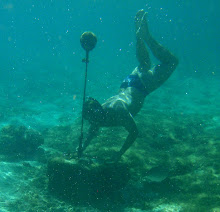
Those of you who are still wondering what creature I caught in the first photo can see a half-"full body shot" of this underwater Juggernaut patrolling the waters of Sydney Olympic Park - I will suggest using tight tight speedos if you should want to go for a swim :-D

Saturday, August 21, 2010

Birding Rottnest Island


As usual, a Perth trip (nearly) always include a trip across the water out to Rottnest Island and in similar consistent fashion it never disappoint. Well to be absolutely honest, I would have been happy to finally bag a Rock Parrot, but following the usual logic it would be sad to deplete such a nice area and bring into question the need to visit it again. ;-)

I have seen Common Pheasant (top photo) in Australia before - at least 3 times - but every sighting have been brief and on Rottnest, this time I managed to get a photo which qualified for the blog. This introduced bird has, very much like the Mute Swan in Northam, only managed to establish a foothold in a few select places - all of them islands.

Another old Rottnest friend is the White-fronted Chat. Last time I managed to get a less than impressive photo of a WFT darting across the path, this time we were truly in for a treat with a little family of not less than 10 feeding at the salt lakes in the middle of the island.


The salt lakes are normally a fantastic bird spot, but this time - end of April - there was very little to see, apart from the White-fronted Chats we only managed to see a couple of other waders; Red-necked Avocet and Red-capped Plover above.

Guess there is a season for everything, no Banded Stilts at the salt lakes this time, but instead we were treated with a little Osprey family living in one of the gigantic nests placed on reefs just of the coast. Every year there are 2 to 4 Osprey families nesting around Rottnest, instead of starting from scratch they will reuse one of the up to 70 year old nest "towers" which through generations have grown to abnormal size. Those of you that know the size of an Osprey - 50 to 65cm - will be able to judge the magnitude of the construction in the photo above.


All good! Rottnest was firing on all cylinders. No new ticks, unless one of my tern-knowledgeable readers can create a bit of excitement by naming the tern in the picture below, I would not mind if someone told me that it was a Common Tern race hirundo? But if someone insist on it being a young-but-not-juvenile Antarctic Tern, then it would be very exciting! ;-) These were the bird, but I will return shortly with a underwater and probably a miscellaneous report.