Friday, July 23, 2010

Cairns Escape - Final Chapter


Finally, I can bring this endless stream of delayed far north Queensland blog post to an end. It has taken way to much time, but I most admit that I have truly had a lot of joy going through the pictures again. Great holiday with lots of highlights and a few things we would probably change for our next trip, here is a little sum up of goods and bads.
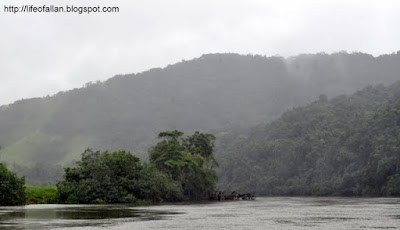
Weather and timing could probably have been optimized. Early April is just considered end of the rainy season and you should know that sometimes the weather does not respect this rule. However, all the rain probably meant that we encountered less Easter shenanigans. We could always find accommodation, no problem booking a car and no queuing to see the Cassowary :-) Price wise, the plane tickets were Easter-price i.e. expensive, however, a bit of looking around and there are always airfare deals out there. Biggest economical setback was probably the need for a solid roof above our heads every night. Despite of having brought the tent, we simply could not use it due to the amount of water pouring down. In most of the exotic locations that meant prices well above $100 a night, In Cairns motels can easily be found around $60 per night.

Birding up north was absolutely fantastic! Tactically we followed the Pareto principle - litterally we split the 5 day holiday into 5 events (i.e. 20%); Daintree, Julatten, Atherton tablelands, South of Cairns, and the Great Barrier Reef. We used 20% of the time each place to see 80% of what the place had to offer :-) Due to this tactic little G. managed to clock up an impressive 57 new bird species:

1. Southern Cassowary
2. Orange-footed Scrubfowl
3. Plumed Whistling-Duck
4. Wandering Whistling-Duck
5. Brown Booby
6. Intermediate Egret
7. Cattle Egret
8. Great-billed Heron
9. Striated Heron
10. Black Bittern
11. Brahminy Kite
12. (Spotted Harrier)
13. Little Curlew
14. Great Knot
15. Grey-tailed Tattler
16. Terek Sandpiper
17. Common Sandpiper
18. Bush Stone-curlew
19. Lesser Sand Plover
20. Little Tern
21. Common Noddy
22. Black Noddy
23. Pied Imperial-Pigeon
24. Wompoo Fruit-Dove
25. Emerald Dove
26. Double-eyed Fig-Parrot
27. Gould’s Bronze-Cuckoo
28. Channel-billed Cuckoo
29. (Barn Owl)
30. White-rumped Swiftlet
31. Azure Kingfisher
32. Buff-breasted Paradise-Kingfisher
33. Forest Kingfisher
34. Blue-winged Kookaburra
35. Large-billed Scrubwren
36. Mountain Thornbill
37. Helmeted Friarbird
38. Macleay’s Honeyeater
39. Yellow-spotted Honeyeater
40. Graceful Honeyeater
41. Varied Honeyeater
42. Yellow Honeyeater
43. Mistletoebird
44. Yellow-bellied Sunbird
45. Chowchilla
46. Grey-headed Robin
47. Pale-yellow Robin
48. Little Shrike-thrush
49. Bower’s Shrike-thrush
50. Spectacled Monarch
51. Shining Flycatcher
52. Spangled Drongo
53. Varied Triller
54. Olive-backed Oriole
55. Figbird
56. White-breasted Woodswallow
57. Torresian Crow
58. Crimson Finch
59. Metallic Starling

I know there are 59 on the list, she had already seen the Barn Owl before (but it sort of deserve to be mentioned) and unfortunately she was very concentrated driving the little Toyota up a steep winding road when the Spotted Harrier took of next to us .. so it was only me that got a good look .. how sad! ;-)
No doubt that Julatten and Atherton tableland supplied most of the birding action, but I really would have been sad not to go south of Cairns to see the Cassowary or to take another day in the hinterland, but missing out on the reef. Cairns Esplanade deserves a mentioning, we used very little time there, probably less than 2 hours in total, but per minute no place delivered more new birds - an absolute must see for any binocular slinging birder.

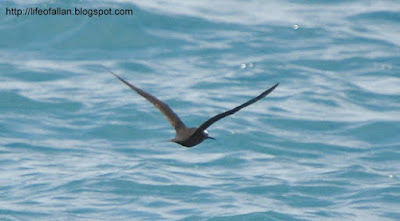
Great Barrier Reef is a must go as well! No way around it - you have to dedicate at least a day for the reef, apart from some world class snorkeling it is a good way to get a bit out of town and to see something else .. including a few pelagic species, like two types of Noddys and a Booby. Tons of fish and good visibility, what more can you hope for? The snorkeling equipment supplied were excellent and with good flippers we both managed to do a bit of free diving, just to feel alive :-)
Good stuff, still dark and Jetstar brought us back to Sydney, I managed to arrive at work nearly normal morning time, still smelling of saltwater and full of energy.

Wednesday, July 7, 2010

The Great Barrier Reef - Fish and Corals Galore


The Great Barrier Reef is full of action! It is all happening around you, fish and corals galore and nearly all of it is easily visible while floating around in the surface, since probably 95% of all the shenanigans are happening in the top 2 meters - where the energy of the sun can be utilized.

The denseness of life is simply breathtaking and at first it is all confusing, new fish darting around between each other, but after a while you realize that despite of all the different colors and shapes, you are dealing with a select few families of fish species. One of the points I have made here on the blog before is that, certain species will be attracted to certain habitats. Despite of the greatness the reef, we only visited one type of habitat! - No doubt that the great barrier reef contains an immense diversity of life and many types of habitats, however, it is also "great" and I guess the time it would take to sail to a significantly different area could just not be justified during a single day trip.

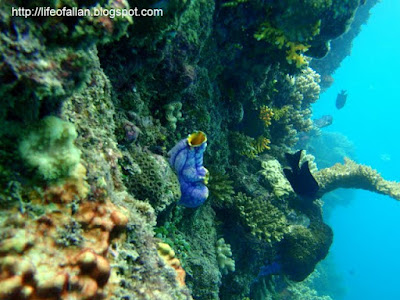
Well, nearly identical dive sites or not, it was still pretty good snorkeling :-) As usual I feel that I have to give you faithful readers a few names of what we saw: The large colorful reef inhabitant in the first picture is of the Parrotfish family - instead of teeth, it has beak-like plates, which allows it to simple bite chunks of the reef and pulverize each mouthful. The parrot fish can then swallow the sandy mixture and digest algae and corals while it is transferred through stomach and intestines.

Above, a species from one of the most popular saltwater fish families around; clownfish aka anemonefish. A certain Pixar movie might have been involved in getting the message across, but seeing a little family of these guys darting around their home-anemone is probably the cutest underwater experience I have had. Best guess is that this little group is Amphiprion melanopus, my fish book call them Black Anemonefish, but it looks like the internet likes; Cinnamon clownfish, Fire clownfish, or Red and black anemonefish.

Another darling of the reef, Six-banded Angelfish Pomacanthus sexstriatus, above. Great colors, fantastic fluorescent blue on the tail and easy to approach without scaring it away.

We also managed to meet an old friend, a Moorish Idol (below), which is one of the most exotic species that can be found around Sydney. Last time I saw one was a year ago in Clovelly Pool just north of Coogee :-)

Another easily identifiable species is the Blue and Gold Angelfish, Centropyge bicolor below. The beautiful colors of this little gem has made it a popular addition to saltwater reef aquariums. Weird to be taken to the various aquarium sites when doing a google search on something you have seen swimming around in the wild.

Good stuff! Great snorkeling and lots of pictures. The little Olympus was given a serious workout and there was not a single available electron left in the battery when the second dive was over. But what a great little camera it is, and how good is it not to have to fool around with a clumsy, expensive and buoyant(!) underwater housing.

I have uploaded a select few (60) photos from our underwater adventure at the Great Barrier Reef to a Picasa album, you can access the album by pressing the picture below.
Great Barrier Reef

Tuesday, July 6, 2010

The Great Barrier Reef - Hallelujah! :-)


After many years of snorkeling here in Australia, I finally made it to the Great Barrier Reef - the most famous diving and snorkeling destination in Australia - if not in the world?..! Not bad at all! :-) There is really no way around going to the reef while being in Cairns, every single street down town Cairns will have a good collection of (dive) shops advertising the possibility of taking you out to the reef on more or less anything that can float. From super fast luxury ships that will do the trip out to the reef so fast that you will hardly have time to get your stinger suit on and find a matching pair of flippers, to equally expensive wooden sailboats that will make the travel a part of the experience.

We went for the cost efficient compromise, about $100 per person (including $15 reef tax). That gave us medium travel speed, the trip took about 1h30m each way - excellent opportunity to see a few new pelagic species - and snorkeling at two destinations on Moore Reef. In between dives the trip even included a decent attempt of serving up lunch, all in all clocking up nearly a full day at the reef.

Finally we managed to have a bit of luck with the weather, it was not raining! Apparently we were also lucky with the amount of wind and surf, chatting a bit to some of the more experienced looking members of our fellow participants revealed that we had chosen the best day of the week for going to the reef. The last 3 days in particular had been quite rough, apparently culminating in nearly 100% of participants from the trip the day before having to "feed the fish" .. we quickly decided to buy the motion Sickness tablets.

The Great Barrier Reef is indeed quite "great" i.e. big, so when the ship stopped and it was announced that we had reach our first destination, I could not help having a funny feeling of is this really it? Yeah, well you could see a few boats in the distance, but otherwise there was nothing except water and eagerly gazing into the water revealed non of all the excitement that had given the reefs its reputation.


Before getting into the water we had to sit through a briefing with the captain of the ship, his first question surprised me a bit, but the reaction was even more confusing. He asked, "is there anyone that cannot swim?" and a couple of fellow snorkelers raised their hands!!..??

Such is the attractive powers of the Great Barrier Reef! Even tourists without swimming capabilities will volunteer, even pay money, to be ferried 1h30m away from the safety of solid land and be dumped into 20-30m deep water to see "the largest structure in the world to have been built by living creatures". Fantastic stuff and I take my hat off for those who decided that they needed a float, it takes a lot of courage to swim in deep waters, even for experienced (pool-)swimmers.

Getting into the water it all started to make sense. We were given direction to an underwater Atoll a good stone throw away from the ship. While swimming there there was nothing to see, but as we got closer you suddenly saw this enormous structure rise from deep below, a large nearly perfectly cylindrical reef probably 50m diameter with the top at a perfect 1m below the surface - perfect for just floating around in the surface looking at the thousands of fish darting around between the corals.


To be continued ..

Saturday, July 3, 2010

Birding South of Cairns - Cassowary at Etty Bay


After a night in one of Cairns cheapest motels we were on the road again. Having spend time north and west of Cairns it was now time to head south. We had found a(nother) favorite folder "Bird Trails Tropical Queensland", which gives advice on where to go and what to see between Mission beach in the south and Cape Tribulation in the north. there is also a web page with more information here.

The plan was once again to push as hard as possible in an attempt to see it all :-) Eubenangee Swamp National Park, Etty Bay and Mission Beach were on the list. It had rained most of the night and we were driving into a were wet north Queensland countryside! As we approached our first stop for the day, Eubenangee Swamp National Park, it became clear that all that water would give us more trouble than just the usual wet camera gear and moist socks. After negotiating the first road flooding in the little Toyota we gave up at the second one, after I had reached above knee high water levels on my bare footed walkthrough - I most have walked nearly 1 kilometer in water that day.


We decided to eat a bit of lunch while enjoy to be being back on land and little G. managed to narrow the gap once again by spotting a Crimson Finch in the sugarcane - I had seen it in Ubirr during my Kakadu trip. Great little bird!
Etty Bay is famous for Southern Cassowary and Beach Stone-curlew, so obviously we were going to give it a go! Cassowarys like tropical rainforest, however, the denseness of the forest up north makes it nearly impossible to see anything that bothers to hide, so the chance of seeing this astonishing bird is often better on an open beach with fruiting trees - like around Etty Bay.

What a fantastic creature! You cannot avoid getting hit with a feeling of awe when a Cassowary majestically passes by and in the back of your head, the stories about how this bird with its blade-like claws are capable of killing humans and dogs if it feels threatened, starts to spin ... :-)


We arrived at Mission Beach and weather had turned absolutely terrible! The few seconds I had the lens upright to take the picture of the White-bellied Sea-Eagle resulted in multiple stains on the front element. Instead of exploring the beach, we voted for cover in the rain forest.

We did the Bicton Hill walk in the Clump Mountain National Park. Photographically it was near worst conditions ever, everything was wet and the rain forest was very dark. However, nearing the end of the trip I had caught up on the battery situation and dared again to let the flash fire. When everything else is impossible, you can always do a bit of macro :-)

We managed to see a Buff-breasted Paradise Kingfisher and probably our only Chowchilla of the trip so decent outcome, but towards the end I must admit it was not exactly fun having been rained upon all day and we were happy to make it to the car and begin our return to Cairns. We had booked a snorkel trip to the Great Barrier Reef for our last full day - at least we were supposed to be wet while doing that! :-D

Sunday, June 6, 2010

Atherton Tablelands - Part 3 - The Crater and Lake Eacham


The day was disappearing fast and our visit to the Atherton Tablelands was soon to end. Deciding to only use one day in this fantastic area was hard and it was truly tempting to stick around, but other places were on the list. If we had gone exclusively for the birds we would probably have taken a day more or two, Atherton Tablelands boast a bird list claiming an impressive 327 species of which 12 are local endemics i.e. those 12 species can only(!) be seen while scouting through the tablelands.

Before leaving we had a final few great spots to visit: Firstly we would visit The Crater in Mount Hypipamee National Park and secondly, Lake Eacham - one of the two lakes constituting the Crater Lakes National Park.

The Crater is an impressive volcanic formation called a volcanic pipe - I am no expert, but the internet comes in handy :-) - pressure from gasses generated at the molten lava rock underground have at some point become so large that they literally ripped the granite bed rock above apart, forming a chimney where trough the volcano could vent. The hole is nearly perfectly cylindrical with a diameter of 61m and a dept of more than 140m, the lower ca. 80 meter of the crater has over time been filled with water forming quite an impressive pool - could be a good spot for practicing your free-diving skills(?) ;-)

A small but good walk, a couple of minuets at the crater and an equal amount of time spend at the Dinner Falls and we were of to Lake Eacham. Both Lake Eacham and Lake Barrine in the Crater lakes National Park are old burned out volcanoes that after having been filled with water have created a couple of unique tableland lakes. Arriving at Lake Eacham we were quite birded out - the intense hunt for new feathered sightings had taken its toll and quite frankly we did not really care much about the bird count anymore :-D

Instead of trying to follow every little twitter we decided to do a good solid 4km walk around the lake. We had a lovely walk lots of chatting and very few pictures - not bad at all. A couple of resident water dragons [update; Great Boyd's forest dragons - credit to Jarrod] managed to display so impressively though that I could not resist charging the flash and getting a couple of photos.

A trip like our 5 day escape to far north Queensland generates an enormous amount of brochures readily available from tourist information offices, guides and motels etc. They often end up piled in the bottom of the car making it impossible to find the one you want. Of all the glossy paperwork we received, this folder was the most helpful finding our birding ways in the highlands - so if you are going north then why not bring an electronic copy - I bet someone out there will argue that a certain recent Apple product could prove helpful in such situations :-D

Looks like I will have to hope for the Helmeted Guineafowl becoming tick'able one day ;-)

Tuesday, June 1, 2010

Atherton Tablelands - Part 2 - Wongabel State Forest


Wongabel State Forest was next on our list. The Mabi forest include a 2.6km botanical walk where a total of 192(!!) species of trees are named. A habitat sporting such an enormous variety of plants should be a great place for all kinds of exciting birds(?) and a quick search on the internet reveals that Wongabel State Forest should indeed be the home to great birds including quite a few that I had not seen before, who would not like to spot a Tooth-billed Bowerbird, Victoria’s Riflebird, Spotted Catbird and maybe a Yellow-breasted Boatbill - the rumor even suggested that little G. could pick up a Rufous Owl if she was lucky.

Well, if luck is measured by the above listed birds, we had absolutely non of it! None of those famous residents decided to show - we saw quite a few LBBs (little brown birds) and of all the pictures taking during our trip, the set taking in Wongabel has by far been the most difficult to go through and do the identification.

Another setback was my battery situation, which made it impossible to follow my new found technique for getting usable pictures in dark rain forests - letting that flash rip in combo with the 150mm macro nearly wide open.


The walk was not exactly demanding, only 2.6km and exceptional flat. The entire exercise felt like walking through a humongous botanical garden with absolutely fantastic dense forest. We probably spend 2 hours so we can truly claim to have given a large part of the signs a read.

Birding was incredible difficult! Lots of stuff was happening, but getting a good look or, even harder, a photo of the small birds darting around in the dense undergrowth was truly stressful. After two hours of chasing LBBs around I must admit I was happy to get out in the open again.

I still got a few "mystery birds" from Wongabel - including the two below, please feel free to chip in :-)


Finally outside we dived into another serve of exotic fruit. If you ever find yourself driving around in the Atherton Tablelands I would recommend doing some regular stops at the farm sales along the road, there are some seriously good fruit and vegetable deals to be made; 6 avocados for $1 .. that beats the local supermarket here in Sydney! Just before leaving we managed to spot a few Chestnut-breasted Mannikins feeding along the road side - good to be out of the dark forest.