Showing posts with label hdr photography. Show all posts

Sunday, November 28, 2010

Coogee - Evening HDR


A few HDRs from Coogee. I finally have a little more time for photography and writing again and hopefully I will be able to do something about the backlog - it would be sad having to go into an eventful 2011 still trying to deal with 2010.


HDR is pretty perfect for capturing the last sunlight of the day and still keep some details in the shadow Unfortunately I was out at least 20 min late so the sun had already disappeared and I had to battle very slow shutter speeds. However, with a few natural camera supports around - who needs a tripod when there are solid rocks around? - it was possible to get enough light through the lens to call it a photo. Knowing how dark is was towards the end, it is quite impressive how the HDR manages to extract colors from all the darkness.

Tuesday, October 12, 2010

Barrington Tops National Park - HDR and Panoramas


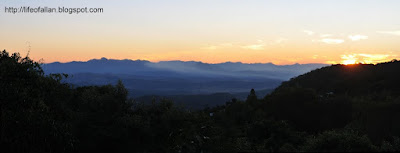
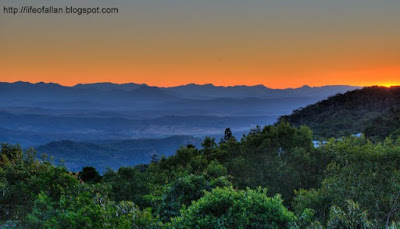
With no birds around we had ample time for all kinds of other photography, including the challenge of trying to capture the beauty of the vistas that are associated with a mountainous environment. HDR does a good job at that! Some time back I used a bit of blog space to describing the process of using HDR and Tone Mapping to capture the details in the bright as well as in the dark parts of a photo, it all got a bit confusing. A few photos are worth many words: Above is a HDR + tone mapped photo combined from 5 raw images and below is a single jpg shot of the same view.

The jpg is doing a fair job at trying to preserve details in the dark front of the photo, but at the cost of badly overexposing the sky in the distance. In the HDR image details are contributed from all 5 photos allowing good resolutions in the dark as well as the bright parts. I might actually prefer the horizontal version of the view.

I also managed to shoot a few panoramas. Autostitch still works a treat and as long as the old CPU does not have too much to chew on and that I do not ask for too high a resolution it spits out panos as fast as I can generate blog posts to put them in. :-)

There is obviously the possibility of combining HDR and stitching - making tone mapped panoramas! - That will have to be another day, but there is absolutely nothing difficult about it, just a matter of shooting a hold flock of raw images and then remember what goes where. :-)

All good! Great escape to Barrington Tops National Park. We entered the park from the western side, but decided to leave going east. It is safe to say that we saw more birds during the ca. 40 min drive out of the park than we had seen during the 3 days up on the plateau. The eastern part also called Gloucester Tops National Park seemed very much alive and vibrant and I could be convinced to go there for a long weekend at some stage if someone is up for a bit of camping and an attempt at seeing a scrub-bird.

Sunday, September 12, 2010

Lamington National Park - Evening Photography From The Terrace


Being restricted to the terrace while the sun was setting behind the mountains was not to bad at all. Having all the camera gear there and good time I managed to experiment a bit.

I am always impressed by the performance of the Autostitch Panrama Tool that I link to in the "Software you can't live without .. and that is free" down to the right of this site. It is really free and it just works incredible well. Set your camera to aperture priority and choose something like f/13 for landscape, see what shutter speed the camera gives you in the center of your wanted panorama. Then set the camera to manual control and dial in f/13 and the shutter speed your camera gave you before. It might sound slightly complicated, but by locking in the same exposure for all the pictures you avoid changes in brightness across the final panorama. The program works on jpg files and handles everything itself - the only thing you have to adjust is what quality you want. Choose "Edit" and "Options" and then I prefer to use the "Scale (%)" setting at either 50 or 100% - but if there are a lot of pictures being stitched and your computer is memory weak, then 25 and even 10% will do just fine.

HDR is equally simple and just as exciting as making panoramas. At the moment I do not have a link to a free HDR software, I will see what can be done about that. Quite simply you take a set of photos of the same scene at different exposures (RAW images preferred). The software will then combine all the information of the photos and selectively let the photo with the most information in a certain region be the main contributor to that part of the final photo. In the photo above the most overexposed photo is probably the only one that was able to catch the details and greenness of the bush in the lower part, whereas only the most underexposed photo would have had the colors of the bright sky. It might all sound very complicated, but as for the panorama tool, it is super easy using the software and if you manage to hold the camera fairly still while shooting your photos, the software will take care of the rest.

Saturday, March 20, 2010

Cape Banks - Australian Hobby in Flight


Went for another little quick afternoon visit to Cape Banks, where we had first seen the Australian Hobby. This time we not only saw it again, but we managed to get a fairly good BIF :-)

After all the excitement with the Pacific Gull at Long Bay, Gemma had been all fired up about finishing of all the (usual) gulls - so mission accomplished and lots of cheering(?) when the Kelp Gull above cruised by.

All good! Great little trip and all this running around after work keeps you fit :-)

Saturday, February 27, 2010

Final HDR and Pano From Ben Boyd National Park


After going through the pictures I realized that I had a few sets of pictures that could be used to make a high dynamic range (HDR) and a panorama. As I have said before it is really simple stuff. Panorama-making software is easily accessible by following the link to the right of my blog I use autostitch, which will run on windows and is free! HDR software is out there as well. Photomatix will let you download a free trial version and it seems new ones are popping up all the time, take a look here or here.

I have managed to get quite a few of the pictures jammed into the last few Ben Boyd National Park posts, but for those of you that want to see them all - with "all" I mean the ca. 10% making it to the internet - I invite you to follow the link below to my Ben Boyd National Park Picasa album.
Ben Boyd National Park

Wednesday, January 27, 2010

Farewell Denmark - See You Soon Again


That was it! We had to leave Denmark and all the snow behind and once again make our way down south and a bit out to the right to our lives in Sydney. Having been en-gifted with a 16GB memory card I suddenly had heaps of room to play and was embracing the new found freedom with a bit of memory hungry high dynamic range (HDR) photography. Shoot for example 5 raw photos of the same scene, at -2, -1, 0, +1 and +2 stops exposure compensation, My Nikon D300 has a bracketing function that will allow you to do this automatically (up to 9 photos at various exposure intervals), but it is easily done manually. Combining all the photos with some HDR handling software (I use Photomatix Pro) you get a picture, where the details in the dark as well as in the light have been preserved, making the scene more similar to how our eyes see - actually our eyes cheat by changing the aperture (the diameter of the pupil) when switching between bright and dark areas not much different from how you cheat when making a HDR photo :-)

Stacking 5 pictures, however, is very revealing when it comes to exposing how dirty your sensor is .. so before I get a flood of comments about the spot(s) in the photo I can just as well admit that it is about time the good old Nikon gets a scrub - most was handled with a simple image sensor vibration, but I might have to do a wet clean one of these days - if you think the HDR looks dirty, I can assure you that having acquired a macro lens is even more revealing than HDR stacking :-/